|
WHAT YOU MUST KNOW TO SAVE YOUR DRIVER'S LICENSE
The California Department of Motor Vehicles (DMV) will suspend your driver's license for four months to four years depending on whether there are priors and/or other aggravating facts unless you take immediate action!
-
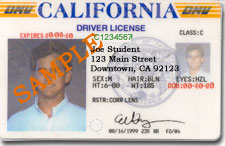
The temporary driver's license you received at the time you were released from custody in place of your real driver's license has a HIDDEN TIME BOMB. YOU MUST CONTACT THE DEPARTMENT OF MOTOR VEHICLES’ DRIVER SAFETY OFFICE IN WITHIN 10-DAYS OF THE DATE OF YOUR ARREST TO REQUEST A HEARING TO CONTEST THE SUSPENSION OF YOUR DRIVER'S LICENSE. If you make a timely request, the suspension of your license will be stayed until the final determination of your case by the DMV. You also have the Right to appeal a decision against you to a real judge in a court of law.
-
IF YOU ARE GOING TO RETAIN AN ATTORNEY, DO SO PRIOR TO CONTACTING THE DEPARTMENT OF MOTOR VEHICLES’ DRIVER SAFETY OFFICE.Your attorney will be able to push your hearing date back to ensure that you are prepared for your DMV case. Furthermore, your attorney will need to coordinate your hearing date with your defense in Court. If you are approaching the 10-day limit to contact the DMV, call to request the hearing yourself to preserve your right to a hearing and advise the representative that your attorney will be contacting them to schedule a hearing date. Do not forget to request a stay of the suspension and to take the name of the person you spoke with about the matter. Remember, you must request a hearing through the appropriate Department of Motor Vehicles' Driver Safety Office—Do not call or visit a Department of Motor Vehicles' Field Office to request a hearing as this does not count as a hearing request.
-
DMV CASES CAN BE WON. Many people think that if their blood or breath test was 0.08% or more they will automatically lose their license. THIS IS SIMPLY NOT TRUE. There are numerous technical and/or scientific defenses, including the failure to strictly comply with the California Code of Regulations, which can and oftentimes do result in suspensions being set aside. An attorney who specializes in DUI Defense can guide you through the process in ways that may reduce any suspension imposed by 50-75%. If you were arrested in Orange County, California you must contact THE DEPARTMENT OF MOTOR VEHICLES' IRVINE DRIVER SAFETY OFFICE, which is located at:
16735 Von Karman Avenue, Suite 110
Irvine, California 92606-4953
Telephone: 949-440-4416
Facsimile: 949-440-4424
WHAT YOU MUST KNOW ABOUT YOUR CHARGES
-
23152(a): It is unlawful for any person who is under the influence of any alcoholic beverage or drug, or under the combined influence of any alcoholic beverage and drug, to drive a vehicle.
-
23152(b): It is unlawful for any person who has 0.08 percent or more, by weight, of alcohol in his or her blood to drive a vehicle.
-
23153(a): It is unlawful for any person, while under the influence of any alcoholic beverage or drug, or under the combined influence of any alcoholic beverage and drug, to drive a vehicle and concurrently do any act forbidden by law, or neglect any duty imposed by law in driving the vehicle, which act or neglect proximately causes bodily injury to any person other than the driver.
-
23153(b): It is unlawful for any person, while having 0.08 percent or more, by weight, of alcohol in his or her blood to drive a vehicle and concurrently do any act forbidden by law, or neglect any duty imposed by law in driving the vehicle, which act or neglect proximately causes bodily injury to any person other than the driver.
IF YOU HAPPEN TO FALL WITHIN ANY ONE OR MORE OF THE FOLLOWING DUI CATEGORIES, YOU SHOULD CONSULT AN ATTORNEY WHO SPECIALIZES IN DUI IMMEDIATELY:
- Drivers Who Injure Or Kill Others
- Drivers Who Were In An Accident
- Drivers With Prior Convictions
- Drivers Who Have Refusals Alleged
- Drivers Who Have Levels Of + .20%
- Drivers Who Hit And Run
- Drivers On Probation
- Drivers Under The Age Of 21
- Drivers Who Were Speeding In Excess Of 30 Mph Of The Posted Speed Limit
- Drivers Who Have Children Under 14 Years Old In The Vehicle
- Drivers Who Have A Low BAC (.12% Or Lower)
Judges in many Orange County Courts will treat these drivers differently, from their initial appearance in Court through the final sentence that is imposed. Some of these differences are required by law, such as mandatory minimum jail sentences, or for multiple offenses; others are at the discretion of the judge. Many judges will set additional bail for multiple offenders and take them into custody until a bond is posted.
DRIVERS WITH HIGH BLOOD ALCOHOL LEVELS
Drivers with high blood alcohol levels may be required to attend Alcoholics Anonymous Meetings, (between 1-7 Meetings per week), as a condition of their continued release on their own recognizance until the case is over. Additionally, if the high blood alcohol level is proven to be over a 0.20%, a 9-month alcohol program is required by law. If the blood alcohol level is proven to be over a 0.15%, a 6-month alcohol program may be required.
REFUSAL TO TAKE CHEMICAL TEST
If you refused to take a test, or failed to complete a test, you face a ONE to THREE YEAR SUSPENSION from the DMV. If you are convicted of DUI and the allegation that you willfully refused to take a test is found to be true, there is a mandatory JAIL SENTENCE, you will be required to attend a six month alcohol program and may be compelled to have an ignition interlock device on your vehicle. Some Police Departments will force you to take a blood test even if you refuse and then use the results against you in Court. This is the worst of all possible scenarios since you will be subject to penalties for refusals and the results of the blood test still comes in at your trial. There are many successful ways to defend a Refusal Case. The officer is required to properly advise you of the consequences if you refuse, but many officers fail to give the required admonition correctly or confuse a driver. Officers will also improperly deny a driver the right to take and complete a breath test. Because of the many serious consequences that flow from a charge of willful refusal, drivers are advised to seek the aid of a DUI ATTORNEY even for a first offense.
PROBATION VIOLATIONS
Drivers who are currently on probation will have their probation revoked and a probation violation hearing will be set. A probation violation for a prior offense could and often will lead to additional jail time and/or harsher penalties on the new DUI offense.
FIRST OFFENSE DUI (NO PRIORS WITHIN 10 YEARS)
PROBATION:
3 to 5 Years Informal Probation
JAIL:
48 hours and up to 6 months jail
time may be imposed
COURT FINES:
Minimum $390 fine to maximum of
$1000. Note, however that the $390 minimum fine, after adding penalty
assessments & miscellaneous court fees, results in a total amount due of
approximately $1400 to $1800.
DUI SCHOOL:
- Attendance at First Offender
Program (FOP) required
- BAC ≤ .15—3-month FOP
- BAC 15 to .19—6-month FOP
- BAC ≥ .20—9-month FOP
COURT MAY ALSO ORDER:
- Impound Vehicle up to 30-days if
owned by defendant
- Ignition Interlock Device for up
to 3-years
INCREASED PENALTIES FOR DUI
ENHANCEMENTS (IN ADDITION TO THE ABOVE)
- Refusal—An additional 48-hours of
Jail
- Passenger in Vehicle Under Age
14—Additional 48-hours of Jail
- Speeding ≥ 30 mph on Freeway or ≥
20 mph on Street or Highway—Additional 60-days Jail
DMV ACTION UPON CONVICTION:
- 6-month license suspension (no
driving whatsoever)
- Restriction Eligibility: Upon
meeting certain requirements, DMV will issue a restricted license in lieu of the
suspension. A restricted license allows driving to and from and during the
course of employment and to and from the First Offender Program. Note, court may
order no restriction eligibility
SEPARATE DMV ADMINISTRATIVE PER SE
SUSPENSION ACTION:
- BAC < .08 -
No action
taken/suspension set aside
- BAC ≥ .08 -
4-month suspension
with eligibility to obtain restricted license after serving 30-day suspension
& upon meeting certain DMV requirements
- Refusal -
1-year mandatory
suspension with no option for restricted license
SECOND OFFENSE DUI (1 PRIOR WITHIN 10 YEARS)
PUNISHMENT IMPOSED BY THE COURT
UPON CONVICTION:
PROBATION:
3 to 5 years informal probation
JAIL:
96 hrs minimum mandatory jail up
to one year jail maximum
COURT FINES:
Minimum $390 fine to maximum of
$1000. Note, however that the $390 minimum fine, after adding penalty
assessments & miscellaneous court fees, results in a total amount due of
approximately $1400 to $1800.
DUI SCHOOL:
Attendance at 18-month Multiple
Offender Program (FOP) required
COURT MAY ALSO ORDER:
- Impound Vehicle up to 30 days if
owned by defendant
- Ignition Interlock Device for up
to 3 years
INCREASED PENALTIES FOR DUI
ENHANCEMENTS (IN ADDITION TO THE ABOVE)
- Refusal/Forced Blood –
Mandatory additional 96 hours Jail
- Passenger in Vehicle Under Age 14
–
Mandatory additional 10 days Jail
- Speeding ≥ 30 mph on Freeway or ≥
20 mph on Street or Highway –
Mandatory additional 60 days Jail
DMV ACTION UPON CONVICTION:
- 2-year license suspension (no
driving whatsoever)
- Restriction Eligibility: After
serving one year of the suspension, you can apply for a restricted license if
certain conditions are met, which may include installing an ignition interlock
device on your vehicle. A restricted license allows driving to and from and
during the course of employment and to and from the Multiple Offender Program.
Note, court may order no restriction eligibility
SEPARATE DMV ADMINISTRATIVE PER SE
SUSPENSION ACTION:
- BAC < .08 –
No action
taken/suspension set aside
- BAC ≥ .08 –
1-year mandatory
suspension with no option for restricted license
- Refusal/Forced Blood –
2-year
license revocation (no option for restriction)
THIRD OFFENSE DUI (2 PRIORS WITHIN 10 YEARS)
PUNISHMENT IMPOSED BY THE COURT
UPON CONVICTION :
PROBATION:
3 to 5 years informal probation
JAIL:
120 days minimum mandatory jail up
to one year jail maximum
COURT FINES:
Minimum $390 fine to maximum of
$1000. Note, however that the $390 minimum fine, after adding penalty
assessments & miscellaneous court fees, results in a total amount due of
approximately $1400 to $1800.
DUI SCHOOL:
Attendance at 18-month or 30-month
Multiple Offender Program (FOP) required
COURT MAY ALSO ORDER:
- Impound Vehicle up to 90 days if
owned by defendant
- Ignition Interlock Device for up
to 3 years
INCREASED PENALTIES FOR DUI
ENHANCEMENTS (IN ADDITION TO THE ABOVE)
- Refusal/Forced Blood –
Mandatory additional 10 days Jail
- Passenger in Vehicle Under Age 14
–
Mandatory additional 30 days Jail
- Speeding ≥ 30 mph on Freeway or ≥
20 mph on Street or Highway –
Mandatory additional 60 days Jail
DMV ACTION UPON CONVICTION:
- 2-year license suspension (no
driving whatsoever)
- Restriction Eligibility: After
serving one year of the suspension and completing one year of the Multiple
Offender Program, you can apply for a restricted license if certain conditions
are met, which may include installing an ignition interlock device on your
vehicle. A restricted license allows driving to and from and during the course
of employment and to and from the Multiple Offender Program. Note, court may
order no restriction eligibility
SEPARATE DMV ADMINISTRATIVE PER SE
SUSPENSION ACTION:
- BAC < .08 –
No action
taken/suspension set aside
- BAC ≥ .08 –
1-year mandatory
suspension with no option for restricted license
- Refusal/Forced Blood –
3-year
license revocation (no option for restriction)
FOURT OFFENSE DUI (3 PRIORS WITHIN 10 YEARS)
PUNISHMENT IMPOSED BY THE COURT
UPON CONVICTION:
PROBATION:
3 to 5 years formal probation
JAIL:
180 days minimum mandatory jail or
state prison up to one year jail/prison maximum
COURT FINES:
Minimum $390 fine to maximum of
$1000. Note, however that the $390 minimum fine, after adding penalty
assessments & miscellaneous court fees, results in a total amount due of
approximately $1400 to $1800.
DUI SCHOOL:
Attendance at 18-month or 30-month
Multiple Offender Program (FOP) required
COURT MAY ALSO ORDER:
- Impound Vehicle up to 90 days if
owned by defendant
- Ignition Interlock Device for up
to 3 years
INCREASED PENALTIES FOR DUI
ENHANCEMENTS (IN ADDITION TO THE ABOVE)
- Refusal/Forced Blood –
Mandatory additional 18 days Jail
- Passenger in Vehicle Under Age 14
–
Mandatory additional 90 days Jail
- Speeding ≥ 30 mph on Freeway or ≥
20 mph on Street or Highway –
Mandatory additional 60 days Jail
DMV ACTION UPON CONVICTION:
- 4-year license revocation (no
driving whatsoever)
SEPARATE DMV ADMINISTRATIVE PER SE
SUSPENSION ACTION:
- BAC ≥ .08 –
1-year mandatory
suspension with no option for restricted license
3-year license revocation (no option for restriction) |

